







For a long time, the bridesmaids’ fashion followed a single rule that everyone wore the same dress, with the same shade, and of identical length. It was easy and symmetrical as well as safe; however,r it never considered that what is unique to a wedding celebration is comprised of real people who have different shapes, skin tones, and personal style. The way one bridesmaid was admired by another could make another feel uncomfortable,e and the uniformity of a bridal party often was at the expense of confidence.
That’s why mismatched dresses for bridesmaids are now such a prominent aspect of modern weddings. They allow each bridesmaid to be herself and still contribute to a bridal ensemble that is well-thought-out and organized. The issue isn’t so much whether the bridesmaid dresses aren’t matched because they definitely are. The issue is how to make them appear more deliberate than just random.
The answer lies in a couple of simple styling guidelines. If done properly, muddled bridal parties aren’t like they were improvised. They appear effortless, elegant, and ready for any photo.
Why Brides Are Moving Away From One-Dress-Fits-All Styling
A bridal party is not always an ensemble of people who have the same proportions or taste. A neckline that is flattering for one could be awkwardly positioned on another. A style that is elegant for one bridesmaid may appear restrictive to another. If everyone is wearing the identical dress, the problem of coordination can be solved on paper; howeverr, a different one is often seen in photos, in which some bridesmaids aren’t as comfortable as others.
Dresses that are mismatched for bridesmaids offer an even more flexible solution. The different necklines, sleeve lengths, and shapes mean that each bridesmaid has the option of choosing one that is appropriate for her body type and ease. The bridal party continues to read as a unit; however, er the individuality of every dress is evident in how each woman carries hers.
This shift is the main reason for the enduring trend. It’s not only about being trendy. It’s about a wedding party,y which looks more appealing in general because every participant is more comfortable with herself.
Choose One Element to Keep Consistent
The most important rule, style-mismatching bridesmaids, is the most neglected: do not mismatch everything all at once.
Every wedding that is successful and mismatched wedding s anchored by a visual anchor to hold the entire look together. The anchor usually is fabric, colour, or length. In the best examples, it’s a combination of two.
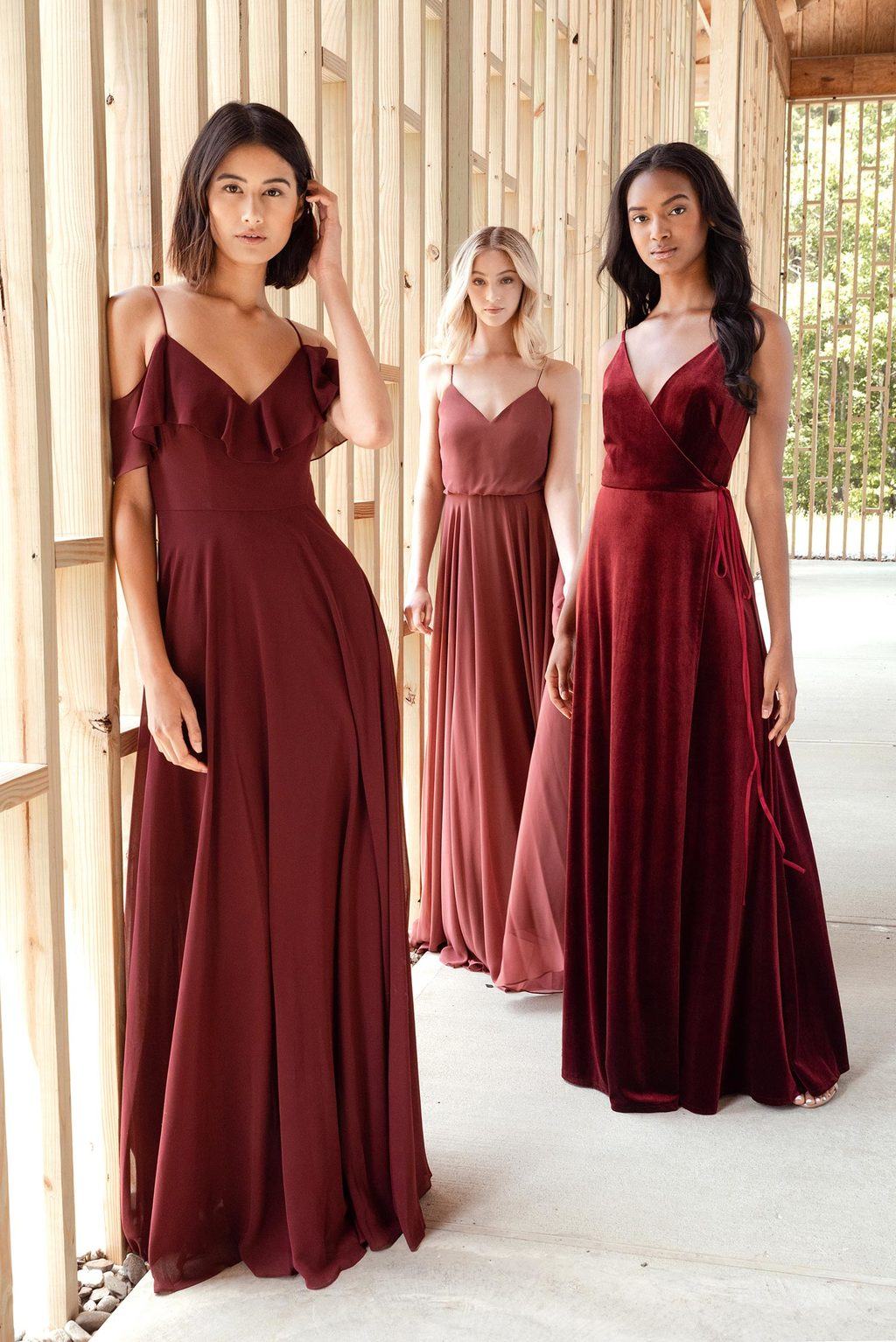
The most straightforward version of this look is the same color, but different shapes. Each bridesmaid will wear the same color, however some choose a neckline with a single shoulder, and another chooses an elegant square neckline, and the third chooses one that is strapless or halter. The palette is the one that does the bulk lifting, which is why the varying cut of the dress feels more like style, rather than chaos.
A more fashionable version is the same fabric, with different necklines. When satin, chiffon, mesh, or velvet becomes the thread that connects them, silhouettes can change in a way without the crowd being scattered.
For brides looking for an easier way to start looking through a selection with various silhouettes that are coordinated will make the process easier,r similar to the Azazie bridesmaid dresses, in which the fabrics and palette are designed to be compatible right from the beginning.
Why Colour Coordination Matters More Than Exact Matching
If there’s a single thing that differentiates intentional mismatched styling from something that appears to be mixed up, it’s color direction.
The bridal party doesn’t have to have the same color to make it look coherent, but the hues must be in the same graphical world. Dusty snd olive, and pistachio all belong to the same family of soft greens and look stunning when layered. Dusty blue, powder blue, and sky blue create an effect of tonality that is more deliberate than uncertain. Warm neutrals like champagne, taupe, and almond are elegant and subtle when the wedding palette is more subtle.
The most common reason for breaking the overall look is an absence of discipline. A cool pastel paired with an intense jewel tone in an earthy tone may seem disjointed until there’s a deliberate design concept that ties them together. In most weddings, cohesion can be achieved by staying within a color range and permitting the hues to change in a gentle manner within the family.
In other words, cohesion is derived from the direction of colour and not from duplicates.
Mix Silhouettes, Not Visual Noise
Combining silhouettes is when mismatched styles can become genuinely fascinating -however, it’s also where things could get a bit messy.
Different necklines usually are a good match. A bridesmaid wearing a V-neck, another with a high neck, one in a one-shoulder, and one with a sweetheart can create a variety that feels thoughtful. These differences let the bride choose what suits her most, which often makes the final look better than strict uniformity ever can.
One area to be cautious about is when you stack more than one statement detail at the same time. If one dress is adorned with dramatic Ruffles, a different dress is a corset bodice with a striking design, and another features an oblique slit that is thigh-high, and another is adorned with oversized puff sleeves, the eyes stop in determining where to go. The bridal party begins to sound louder than being layered.
The best mismatched designs are those that keep details pretty in the background. The diversity originates from shape and for,m and not from each outfit that’s competing for attention. The objective is variety in shape rather than chaos in design.
Use Fabric and Length to Keep the Bridal Party Grounded
As silhouettes change, the choice of fabric and length gradually becomes the most significant aspects of the bridal wedding.
A group of chiffon that is floor-length will feel perfectly unified even if each bridesmaid has an individual neckline, since the fabric and length will do the work of unifying. This is the same for the guests in silk gowns or velvet, or styles with a mid-length for modern civil ceremonies. The length determines the formality of the party, and the fabric is what determines how dresses reflect light, move throughout the event, and finally capture.
The way you dress matters more than brides usually realize. Matte chiffon looks romantic and soft. The stretch satin appears cleaner and more sculpted. Velvet adds warmth and depth. Fabrics with burnout and mesh feel more modern and trendy. Affirming that you are in one family of fabrics regardless of how the other elements are different is among the easiest methods to keep your style under control.
Think About Photos, Not Just Individual Dresses
The most frequent errors in bridal gowns are looking at dresses one by one instead of imagining the way they’ll look.
A dress may be stunning in its own right, but appear a little off from the others when the proportions, material weight, or tone do not match the others. Wedding photography can reveal this fast. Wedding ceremony lineups, group photos wedding bouquets, group portraits, and candid photos of walking let you know if the bridal party appears to be well-organised or uncoordinated.
This is why the best bridal parties with mismatched outfits are arranged with the entire shape ie mind. Are the necklines well-balanced when bridesmaids sit shoulder-to-shoulder? Does each fabric reflect light in the same manner? Do you notice that one dress is more formal or casual than the other? Does it have enough variety to feel fresh, yet enough consistency to feel shrewd?
The Best Mismatched Looks Still Feel Intentional
The best way to do it is to mix and match bridal style allows for the freedom to create a unique style within a set of rules. It lets you express yourself without disorder and variety that isn’t disorderly, and individuality without losing polish. It’s the kind of style that is trendy now, yet will look classy in photos of weddings in the future — which is the test every bridesmaid’s outfit must pass.
It’s the reason why so many modern brides are attracted to this style. It addresses a major issue. Every bridesmaid is able to wear a dress that is appropriate for her, while the bridesmaids will appear more sophisticated and not less.
The trick isn’t making each dress look different. The trick is to make every different feel purposeful as a shared colour family, a common fabric, a common formality, bringing the entire group together even though the details differ.
If you’re a bride who is looking to put this in practice, the simplest start is typically an organized mixing and matching bridesmaid dress collection that brings different silhouettes and coordinated colors together in one location.